
Myanmar has long been recognised as a Southeast Asian destination with a fascinating culture and heritage. The country’s tourism situation has shifted considerably over the years, and there are things worth knowing about its cuisine, culture, and cultural sites regardless of when a trip is possible.
For those considering a visit to Myanmar, here are some essential insights to help plan an informed journey.
Table of Contents
Key Takeaways:
- Myanmar has a distinctive Southeast Asian identity shaped by its Buddhist culture, colonial architecture, and lesser-known cultural sites
- Burmese cuisine blends Chinese, Thai, and Indian influences, featuring distinctive dishes like lahpet thoke (pickled tea leaf salad) and mohinga (fish noodle soup)
- Top destinations include Bagan’s ancient temple ruins, the scenic Inle Lake, and the vibrant cities of Yangon and Mandalay
- Familiarising oneself with Burmese numerals and basic language phrases can enhance the travel experience
- Comprehensive travel insurance is essential, though current travel advisories significantly affect coverage for Myanmar
Burmese Cuisine
Burmese cuisine has strong Chinese, Thai and Indian influences due to Myanmar’s location at the confluence of these three countries. While there are many regional variations and dishes depending on where one travels, visitors are likely to encounter rice, curries and the liberal use of condiments like fish sauce wherever they go.
One fascinating feature of a typical Burmese meal is the salad, or thoke, the most famous being lahpet thoke, which is made of pickled tea leaves. Another popular dish is mohinga, a fish and noodle soup that’s often consumed at breakfast. At a typical local meal, diners are served a variety of curries and sometimes soups together with rice.
Language and Culture of Myanmar
Burmese is the official and most widely spoken language in Myanmar, with about two-thirds of the population being able to speak it. There are also about a hundred minority languages including Shan, Karen, and Kachin.
One notable aspect is that Burmese numerals are often used by small local businesses rather than the Arabic numeral system familiar to most international travellers. It can be helpful to bring along a printout of the numerals and their corresponding translation.
Burmese culture is strongly influenced by Buddhism, as evidenced by the Buddhist temples that can be seen just about everywhere. Myanmar (then Burma) was under British colonial rule from 1824 to 1948, initially as part of British India and separated as its own colony from 1937 onwards. Colonial-era buildings and British street planning are still visible today, particularly in Yangon.
Top Sights
Myanmar is not a massive country, but the top sights require quite a bit of moving around, so visitors should be prepared to take long-distance buses.
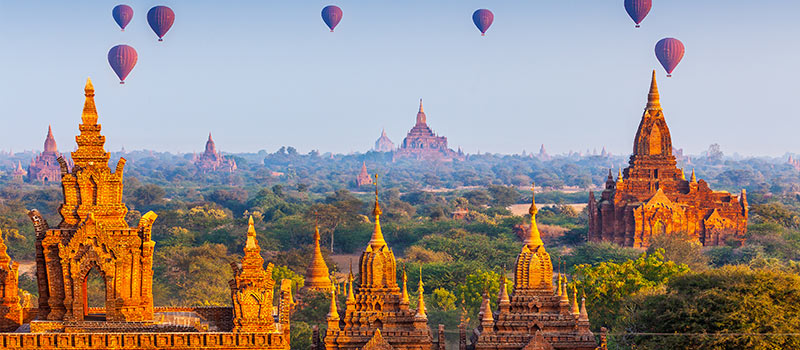
One of Myanmar’s most popular sights is Bagan, where travellers will find the world’s biggest and densest collection of Buddhist temple ruins. Renting an electric bicycle and exploring this vast, largely unpopulated area offers an unforgettable experience.
Another popular destination is Inle Lake, which has recently seen a proliferation of guesthouses and hotels. The Intha, the people who live and fish in the area bordering Inle Lake, have a unique way of piloting their boats which involves balancing on one leg while using the other to row.
Two must-see cities in Myanmar are Yangon and Mandalay. In Yangon, visitors can marvel at the blinding gold stupa of the enormous Shwedagon Pagoda, admire examples of colonial architecture such as Strand Hotel and the High Court, and explore the ethnic enclaves of Chinatown and Little India.
In Mandalay, don’t miss Mandalay Hill, which is littered with monasteries and pagodas and offers stunning views over the city. Other highlights include the Royal Palace, as well as the Jade Market and Flower Market.
A Note on Travel Insurance
Before any overseas trip, travel insurance should be considered as part of the preparation. That said, Myanmar is currently under an active MFA “defer all travel” advisory, and under HL Assurance’s Travel Protect360, as with most Singapore travel policies, coverage for destinations under such advisories is typically restricted or excluded. Anyone considering a trip to Myanmar despite the advisory should review the Travel Protect360 policy wording and speak to HLAS’s team directly about what coverage would or would not apply.
For trips to other destinations, HLAS’s Travel Protect360 plans come in four tiers, being Basic, Silver, Gold, and Platinum, in both single-trip and annual multi-trip formats.
When in doubt, you can chat with HLAS to find out more. Please direct your enquiries to our service hotline at 6702 0202 or email us at service@hlas.com.sg.
Frequently Asked Questions
Do I Need A Visa To Visit Myanmar?
Most travellers to Myanmar require a visa. Myanmar resumed issuing tourist e-Visas in April 2025 following a suspension, and the e-Visa allows for a stay of up to 28 days from the date of arrival. The approval letter itself is valid for 90 days from the date of issue. Requirements can change, so it’s worth checking with the Myanmar embassy or consulate closer to any planned application.
What Is The Best Time To Visit Myanmar?
The best time to visit Myanmar is during the cool, dry season from November to February. The weather is pleasant, making it ideal for sightseeing. Avoid the monsoon season (June to October) when heavy rainfall can disrupt travel plans.
Is It Safe To Travel To Myanmar?
Safety is a significant concern in Myanmar due to the ongoing civil conflict following the February 2021 military coup. Singapore’s Ministry of Foreign Affairs currently advises Singaporeans to defer all travel to Myanmar. The situation remains active and volatile, and anyone with existing plans to visit should check the latest MFA travel advisory before making any decisions.
What Currency Is Used In Myanmar And Can I Use Credit Cards?
The official currency is the Myanmar Kyat (MMK). Myanmar is largely a cash-based economy, and credit card acceptance has become increasingly limited following the 2021 coup and subsequent international financial restrictions. The US dollar has historically been used for exchange, though local exchange availability and conditions can vary considerably.
What Should I Wear When Visiting Temples In Myanmar?
When visiting temples and religious sites in Myanmar, dress modestly. Cover your shoulders and knees, and you’ll need to remove your shoes and socks before entering temple grounds. It’s advisable to wear slip-on shoes for convenience.
About the Author
HL Assurance (HLAS) is a licensed general direct insurer in Singapore and a member of the General Insurance Association (GIA). Backed by the Hong Leong Group (a diversified conglomerate spanning banking, financial services, and investments across Asia, Europe, and beyond), HLAS offers a wide range of personal and commercial insurance products, including travel, motor, home, maid, and personal accident insurance. With a track record of award-winning service and a focus on digital accessibility, HLAS is dedicated to helping individuals and businesses in Singapore protect what matters most.
 Malaysia
 Hong Kong