
Turning your property into your dream home is an exciting journey. You get to reimagine your living spaces and pick out new paint colours. However, a major home makeover can also be filled with unexpected hurdles, especially if you’re not carrying any type of home insurance in Singapore.
Many people focus on the final look of their home but forget to protect their finances during the dusty construction phase. This is exactly where renovation insurance for homeowners becomes important.
In this guide, we will explore how people manage their home upgrades and look at the common slip-ups you should avoid when taking on renovation works without renovation insurance.
How Homeowners Approach Renovation in Singapore?
Homeowners generally choose one of three paths to complete their home improvements.
Full Service
This route involves hiring an interior design firm to manage the entire project from start to finish.
They handle the initial conceptual sketches, source materials, and employ their own builders. They also supervise daily on-site work.
This option saves you time, though it generally costs more due to management fees.
General Contractor
You produce the layout ideas or blueprints, and the contractor executes the physical work. They manage their own teams of carpenters, plumbers, and electricians.
Owner-Builder
The most hands-on approach is becoming an owner-builder. You take charge of the entire project yourself. You independently source, hire, and schedule every tiler, painter, carpenter, electrician, and plumber. While this method can save you money on management overheads, it requires a significant time commitment and a solid understanding of the building steps.
Can I Work On My Home Without Renovation Insurance?
While you can proceed unprotected, doing so means you voluntarily accept all financial risks. If a worker gets injured or a wall collapses, you will have to cover the resulting bills out of your own pocket.
Mistakes Homeowners Make Working Without Insurance
If you choose to complete your home makeover without personal coverage, you must be incredibly cautious. Below are the common errors you should actively avoid.
Mistake #1: Outsourcing to a Contractor Who Doesn’t Have Insurance
If you do not hold your own protection, you must make sure that the firm you hire carries comprehensive coverage.
Some smaller, low-cost contractors may skip purchasing third-party liability cover or Work Injury Compensation Insurance (WIC), as required under the Work Injury Compensation Act (WICA), which is mandatory for employers in Singapore. This is often why they can offer relatively low quotes.
If you engage an uninsured firm and they damage your existing structure, you may find yourself involved in a lengthy and costly legal dispute. Without an insurance policy backing the contractor, recovering compensation can be difficult and time-consuming.
To protect your finances, always ask to see the builder’s valid certificate of insurance before allowing them onto your property.
Mistake #2: Outsourcing to Builders Not Registered with the BCA
In Singapore, registered firms must meet standards of technical competence and financial safety.
If you use a firm that is completely off the radar, you have no recourse if they do a terrible job or abandon the site mid-way.
Always check the official BCA registry to verify your contractor’s credentials. Taking this simple step ensures that the physical integrity of your walls and plumbing lines remains intact, saving you from expensive rectification works later.
Doing so also protects the safety of the project’s inhabitants.
Mistake #3: Lack of Design Consultation
Without thorough design or feasibility consultation, both the construction process and the finished home may be exposed to safety hazards and structural risks.
If the structure fails during construction or after completion, you’ll incur expenses for any damage your property incurs.
A hasty design process can also result in an unoptimal layout, prompting you to go through another renovation process.
You might find that your new kitchen cabinets block your refrigerator door from opening, or that the countertop isn’t at an ergonomic height.
Spend ample time with a design consultant before engaging in costly renovation, as cost-cutting at this phase can result in hefty expenses down the road.
Mistake #4: Not Accounting for Cost Overruns
Many people create a budget that leaves no room for surprises.
Home renovation and unexpected costs go hand-in-hand:
- Discovering rusted pipes, faulty electrical wiring, or structural defects during renovation will need to be addressed.
- Project timelines can extend beyond the plotted schedule, which can result in spending more for labour.
- Change orders are also commonplace. If homeowners decide that they no longer want a chandelier in the living room and now want it in the dining room, the labour required to make this change can incur additional costs.
Always set aside an extra ten to twenty per cent of your total budget as a dedicated emergency fund to manage these discovery repairs and unexpected scenarios.
Why Homeowners Need Insurance for Renovation Projects
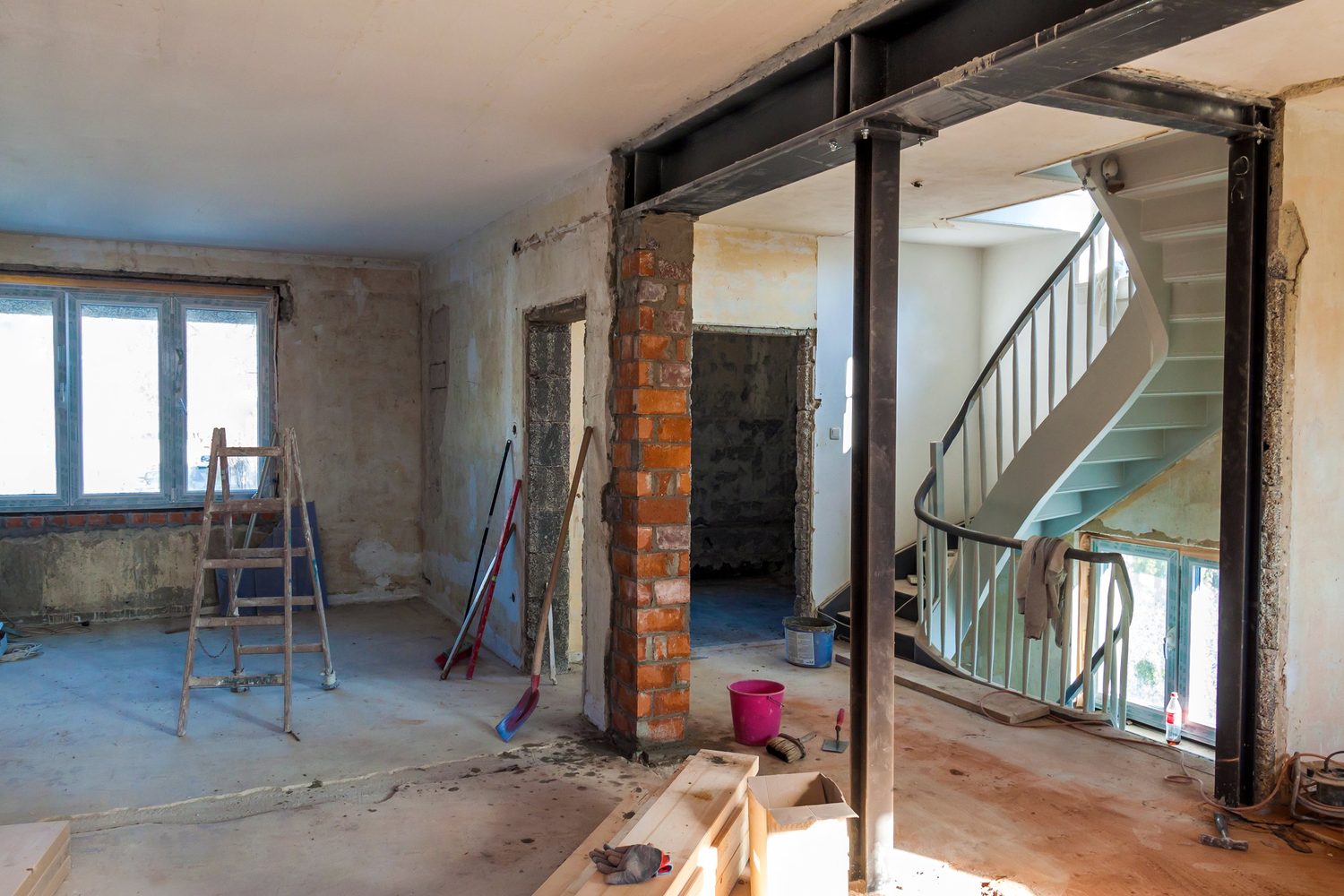
Even if you take every precaution, some accidents are completely out of your hands.
A plumbing mishap could cause a massive leak that destroys your neighbour’s expensive wallpaper, or an accidental fire could damage the apartment block’s common corridor.
Policies you should carry while your home is undergoing renovation include the following:
Contractor’s All Risks (CAR) Insurance
Contractor’s All Risks insurance is typically purchased by your renovation contractor. It serves two important purposes during a renovation project.
First, it covers physical damage to ongoing construction work and on-site materials, helping to protect the investment if an incident, such as an electrical fire, which can damage newly installed fittings or custom cabinetry.
Second, it includes third-party liability coverage. If hired workers accidentally damage a shared pipe and cause water to leak into the unit below, this policy responds to the resulting repair claims from neighbours.
Home Contents Insurance with Renovation Extensions
With your home now turned into a construction site, your items face a heightened risk of impact damage, dust contamination, and theft.
Our Home Protect360 plan includes an Interior Decoration and Refurbishment Work extension, covering accidental loss of, or damage to, household contents during the renovation period.
This extension is valid for renovation works carried out by contractors for up to 60 consecutive days and pays up to 30% of your Household Contents benefit limit, subject to policy terms and a standard deductible.
If a worker accidentally damages your refrigerator with a ladder, or if stored electronics go missing from the unit, this coverage helps provide the financial compensation needed to replace them.
Personal Liability Coverage
An active job site introduces numerous physical hazards, including exposed wiring and uneven subfloors.
If a visitor slips on loose debris or trips over timber inside your unit, they can hold you legally accountable for their injuries.
If ongoing construction also causes property damage to neighbouring homes, you can be held liable for that as well.
Personal liability coverage helps protect your savings by covering claims arising from the renovation. Under our Home Protect360 plan, this protection is included as worldwide personal liability cover of up to S$500,000.
Get Comprehensive Renovation Insurance for Homeowners Today!
Your home represents your hard work and your family’s future. Do not let an unexpected building accident ruin your financial security.
We want to help you create your dream home safely. We offer reliable home insurance options in Singapore, including Home Protect360, to safeguard your household assets and personal valuables against renovation-related incidents.
Take the stress out of your home transformation with HL Assurance. When in doubt, you can chat with HLAS to find out more. Please direct your enquiries to our service hotline at 6702 0202 or email service@hlas.com.sg.
Frequently Asked Questions
Does my existing, standard home insurance cover my property while it is undergoing major renovations?
A standard policy assumes the home is in a normal, habitable state. The moment walls are knocked down, plumbing is exposed, and external workers enter the property, the risk profile changes. Coverage can therefore become limited unless your policy includes a renovation-related extension, such as the Interior Decoration and Refurbishment Work cover in our Home Protect360 plan.
Who is responsible for purchasing the renovation insurance, me or my contractor?
Ideally, both parties should be covered. While established contractors often carry their own insurance, their policy limits might be shared across multiple active job sites. It is highly recommended that homeowners secure their own renovation insurance or extensions to guarantee full protection for their specific unit and any third-party liabilities.
Are DIY (do-it-yourself) renovation accidents covered under renovation insurance?
Generally, no. Most renovation insurance policies require that the work be carried out by licensed contractors and registered businesses. If you decide to demolish a wall yourself and an accident occurs, the insurer will likely deny the claim due to unauthorised workmanship.
Author
HL Assurance (HLAS) is a licensed general direct insurer in Singapore and a member of the General Insurance Association (GIA). Backed by the Hong Leong Group — a diversified conglomerate spanning banking, financial services, and investments across Asia, Europe, and beyond — HLAS offers a wide range of personal and commercial insurance products, including travel, motor, home, maid, and personal accident insurance. With a track record of award-winning service and a focus on digital accessibility, HLAS is dedicated to helping individuals and businesses in Singapore protect what matters most.





 Malaysia
 Hong Kong