
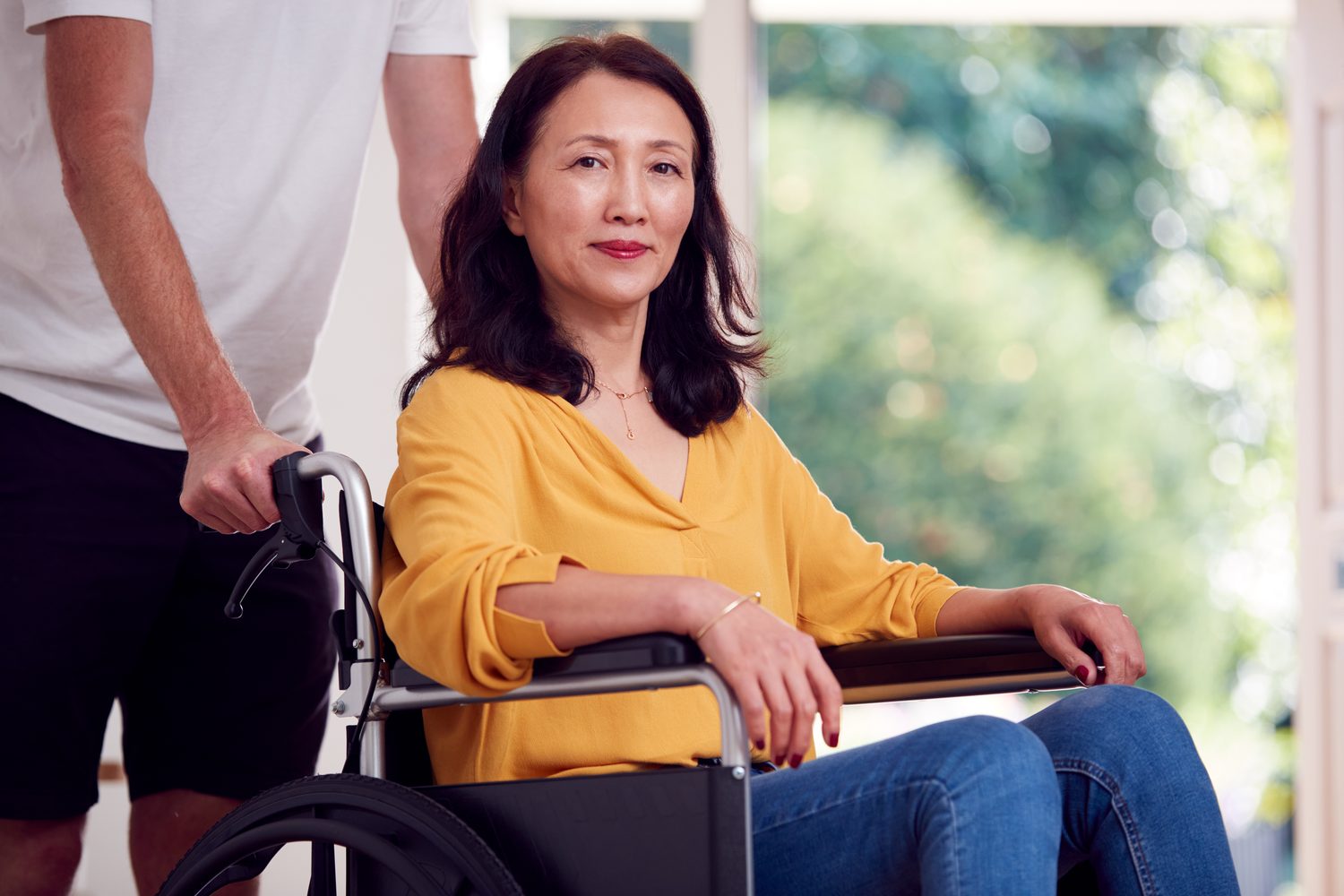
Most of us plan for retirement, school fees, or a new home, but rarely for the possibility of losing our ability to work altogether. Total and permanent disability (TPD) can happen to anyone, at any age, through illness or accident.
At HL Assurance, we have seen how unprepared families can be financially when this happens, which is why we believe understanding TPD and having a suitable family accident insurance plan in place matters.
Key takeaways
- TPD can permanently end your ability to earn an income, not just temporarily interrupt it
- Costs extend beyond medical bills to home modifications, caregiving, and daily family expenses
- Coverage options in Singapore include CPF schemes, employer benefits, and personal accident insurance
- Planning early and reviewing your coverage regularly reduces financial vulnerability
Understanding Total and Permanent Disability (TPD)
What is Total and Permanent Disability?
Total and permanent disability (TPD) is a condition that permanently prevents a person from working due to illness or injury. The disability may be defined as the inability to perform any occupation or one’s specific occupation, depending on the insurance policy or scheme.
Unlike temporary disability, which allows for eventual recovery and return to work, TPD is considered irreversible under most insurance and government scheme definitions in Singapore.
Insurers and schemes such as CPF’s Dependants’ Protection Scheme generally require certification by a registered medical practitioner confirming that the condition has lasted, and is expected to continue, for a defined period, often at least six consecutive months.
This distinction matters for financial planning because temporary disability may only require short-term income replacement, whereas TPD calls for a longer-term financial strategy that accounts for a permanent loss of earning capacity.
Types of Disabilities Covered Under TPD
[Embed: https://www.youtube.com/watch?v=ZWw6zLlsg6A]
TPD definitions typically cover a range of conditions, including:
- Physical disabilities affecting mobility, such as loss of limbs or paralysis
- Sensory disabilities, including total and irreversible loss of sight or hearing
- Cognitive and mental health conditions that prevent a person from performing work-related tasks
- Terminal illnesses, which some schemes classify alongside TPD for benefit purposes
Definitions also vary by “occupational classification”.
- Any Occupation TPD means you must be unable to work in any job suited to your training and experience
- Own Occupation TPD only requires that you be unable to perform your specific role.
It is worth checking which definition applies to any scheme or policy you hold, as this affects how easily a claim is approved.
Financial Impact of Total and Permanent Disability
Loss of Income and Earning Capacity
The most immediate impact of TPD is the loss of employment income. For many Singapore households, especially dual-income families, this can mean an immediate shortfall in covering mortgage payments, utilities, and daily expenses.
Beyond the immediate loss, TPD also forecloses future earning potential, including promotions, bonuses, and career growth that would have otherwise contributed to long-term wealth accumulation.
Increased Healthcare and Care Costs
Disability often brings ongoing costs that were never budgeted for, such as:
- ongoing physiotherapy or rehabilitation
- prescription medication
- mobility aids
- possibly home modifications
For more severe cases, professional caregiving or nursing support adds a recurring monthly cost that can run into thousands of dollars over time.
Family Expenses and Dependents’ Needs
TPD not only affect the individual but also families, too. Families with school-going children continue to face education costs. Mortgage repayments and household bills remain due regardless of income status. In many cases, a spouse may need to reduce working hours or leave employment altogether to provide caregiving support, compounding the household’s loss of income.
Table: Common TPD-related expenses for Singapore families
| Category | Examples |
|---|---|
| Medical | Rehabilitation, medication, mobility equipment |
| Home | Renovations, accessibility modifications |
| Caregiving | Domestic helper, professional nursing care |
| Family | School fees, daily living costs, transport |
| Housing | Mortgage, utilities, and conservancy charges |
TPD Coverage Options Available to Singaporeans
Government and CPF-Linked Schemes
Singaporeans contribute to several CPF-linked schemes that provide a baseline of protection.
- The Dependants’ Protection Scheme (DPS) offers a payout to the insured or their family in the event of death or TPD.
- CareShield Life provides monthly cash payouts for severe disability that requires assistance with daily activities, primarily intended to cover long-term care needs rather than income replacement.
These schemes form a useful starting point but are rarely sufficient on their own to replace a full income or cover all family expenses.
Personal Accident Insurance with TPD Benefit

For disability arising from accidents specifically, a family accident insurance plan can provide a lump sum payout in the event of total permanent disability, on top of accidental death and medical expense coverage.
At HL Assurance, our Family Protect360 plan provides comprehensive family protection with Total Permanent Disablement coverage of up to S$350,000 for adults, alongside an Income Protector benefit of up to S$1,250 per month that helps replace lost monthly income while you recover or adjust to a permanent change in circumstances. Additionally, unmarried children aged 1-18 years (or up to 25 if studying full-time) are covered for free under the family plan.
It is worth noting that personal accident insurance covers disability resulting from accidents, not illness. For TPD arising from a serious medical condition, a critical illness plan or life insurance policy with a TPD rider would be more appropriate, and we would always encourage households to review their full insurance portfolio rather than rely on a single policy type.
Building a Layered Protection Strategy
Because no single scheme or policy covers every scenario, most financial advisers recommend a layered approach:
CPF schemes as a baseline, supplemented by personal accident coverage for accident-related TPD, and critical illness or life insurance for illness-related disability.
Reviewing how these layers work together, rather than purchasing each in isolation, helps avoid both gaps and unnecessary overlap in coverage.
Planning for Long-Term Financial Security
Calculating Your Coverage Needs
Start by listing your monthly income, outstanding debts such as your mortgage, and recurring family expenses. From there, estimate how long your existing savings would last without income, and what monthly shortfall a disability would create. This exercise gives a realistic figure to work towards rather than an arbitrary coverage amount.
Reviewing Your Protection Regularly
Life circumstances change. A new mortgage, a growing family, or a career change can all shift how much coverage is appropriate. We recommend reviewing your protection plans at least once every two to three years, or whenever a major life event occurs (marriage, a new home loan, a child, a career change, or a significant change in income).
Protecting Your Finances Against Total and Permanent Disability
Total and permanent disability can disrupt a household’s finances far beyond the initial loss of income, touching everything from daily expenses to long-term caregiving needs. Singaporeans have access to a combination of CPF-linked schemes, personal accident insurance plan, and critical illness or life cover that, used together, can provide meaningful financial protection.
At HL Assurance, we believe protection should be straightforward and accessible. Our Family Protect360 plan offers comprehensive Total Permanent Disablement coverage of up to S$350,000 alongside income protection of up to S$1,250 per month, designed to give you and your entire family a financial buffer when it matters most.
Reviewing your current coverage today, rather than waiting for an unexpected event, is one of the most practical steps you can take towards long-term financial security.
When in doubt, you can chat with HLAS to find out more. Service Hotline: 6702 0202 | Email: service@hlas.com.sg
Frequently Asked Questions
How much TPD-related coverage do I need?
This depends on your income, debts, and family expenses. A common starting point is to estimate your annual income multiplied by several years, then adjust based on existing savings and other coverage you already hold.
Does CareShield Life cover total and permanent disability?
CareShield Life covers severe disability requiring assistance with daily activities, with a focus on long-term care rather than full income replacement. It works best alongside other protection, such as personal accident insurance.
Can I claim TPD benefits from multiple policies?
In most cases, yes, though some policies include coordination-of-benefits clauses. Always check your specific policy terms and inform each insurer of other coverage you hold.
Does personal accident insurance cover TPD caused by illness?
No. Personal accident insurance covers disability resulting from an accident. TPD caused by illness would typically fall under a critical illness plan or a life insurance policy with a TPD rider.
What happens to my claim if my disability is later reassessed as not permanent?
Most schemes require ongoing medical certification. If your condition improves and no longer meets the criteria for permanence, future payouts under certain benefit structures may be adjusted or discontinued, depending on the specific terms of your policy.
Does Family Protect360 cover my children automatically?
Yes. Under the Family Protect360 plan, unmarried children between 1 to 18 years old (or up to 25 years old if studying full-time) are covered for free when you purchase the family plan. Children receive coverage for Accidental Death, Permanent Total Disablement, and Accident Medical Expenses at age-appropriate benefit levels.
About HL Assurance (HLAS)
HL Assurance (HLAS) is a licensed general direct insurer in Singapore and a member of the General Insurance Association (GIA). Backed by the Hong Leong Group, a diversified conglomerate spanning banking, financial services, and investments across Asia, Europe, and beyond, HLAS offers a wide range of personal and commercial insurance products, including travel, motor, home, maid, and personal accident insurance. With a track record of award-winning service and a focus on digital accessibility, HLAS is dedicated to helping individuals and businesses in Singapore protect what matters most.


 Malaysia
 Hong Kong